Sunday, September 20, 2009

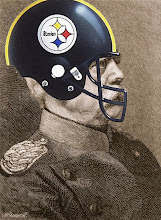
Cotton Hill and Edward Whitacre, Jr.

Cotton Hill and Edward Whitacre, Jr. -- separated at birth?


(http://hollywoodsnark.com/2007/11/12/a-requiem-for-cotton-hill/)


(http://www.time.com/time/quotes/0,26174,1903758,00.html)

Tuesday, August 4, 2009

For the Medical Industry, It's Time for a Change

Anybody who thinks the medical industry in this country doesn’t need reforming either has bag loads of money or runs the medical industry. There are two obvious problems with our health care industry. First, the cost of insurance (and the ever increasing costs that insurance won’t pay – like annual checkups for children) is getting out of hand. For years, the cost of medical care in this country has been exceeding the rate of inflationgreatly exceeding the rate of inflation. The rate of increase is having an adverse affect on retirement systems across the country. In essence, the insurance companies, at the heart of the medical industry, have no competition and insignificant regulations to keep down their costs. They are running a protection racket that makes the Mafia jealous. The American Chamber of Commerce has recently argued that reforming the health care industry will put insurance companies out of business. This is like worrying the Mob might be put out of business. And since hospitals know that insurance companies have no incentive to hold down costs because they have a captive market, the hospitals keep raising their prices, outstripping inflation (think about the 10 dollar Tylenol).

The second problem is the high number of Americans who don’t have health insurance, thus often preventing them from getting proper medical care for them or their children. At least 46 million persons below the age of 65 don’t have health insurance, and, of these, over 8 million are children. We, as a nation, are simply letting over 46 million of our fellow Americans, our brothers and sisters, suffer because we can’t or won’t think of ways to help them.

The most common argument against reforming the system is the shibboleth of “socialized medicine” and the exaggerated claims that such national health care systems don’t work. The exaggerated failures in Canada, Britain (and here, and here), Sweden, etc. are the typical scare tactics used to frighten Americans. The argument boils down to, yes, our system isn’t perfect, but if you try to fix it, it will get worse. First, the use of the word “socialized” is simply a way to scare Americans. The typical American believes the mindless equation: socialism = communism. Secondly, in reality, we already have “socialized” medicine in this country. “Socialized” medicine is simply medical care paid for by the government. Medicare, Medicaid, and Veterans’ Affairs are examples of government-supported medical care. This is not to say that these services don’t need reforming as well. This does mean that the argument that reforming the medical system will lead to the horrors of “socialized medicine” is simply scare tactics. Call it what ever you want, we need to reform the medical system, and if you want to call it “socialized medicine,” “managed healthcare,” “single-payer universal care,” or some euphemism, it doesn’t matter as long as the obviously broken system gets fixed.

The high cost of a national health care system is trotted out as a reason not to even attempt to provide basic health care to all Americans. However, according to a report by the Organization for Economic Co-operation and Development (OECD), the US already spends more on health care than any other country. Thanks to the obscene profits across the medical industry, Americans enjoy paying 16.0 per cent of GDP on healthcare in 2007. In the same year, Canada spent 10.1 per cent, Sweden spent 9.1 per cent, and Britain spent 8.4 per cent (the average cost of health care in the countries surveyed in the OECD report was 8.9 per cent of GDP). Thus, we are paying more than any other industrialized nation, including those with the dreaded “socialized” medicine, for a system that is obviously broken .


Too often, the argument against reforming the medical system is that it’s too complicated to fix. However, just after World War II, Europeans said the quickest way to get something done is to tell an American it can’t be done. With that kind of attitude, we figured out the Marshall Plan and put a human on the moon. Now, unfortunately, when you tell an American something can’t be done, he shrugs his shoulders and watches what he has on the DVR.

We used to have the smartest people in the world. In 1960, President John F. Kennedy challenged Americans to put a man on the moon. Americans (and people from all over the world) worked together, without regard to political affiliations, for seven years and achieved a remarkable goal. If we assume that other countries haven’t figured out their version of national health care (and this is a major assumption based on a phenomenal amount of disinformation), that gives us something to learn from. The basic elements of the scientific method are to gather data and make experiments. We have numerous observations and experiments to draw from. Maybe it’s time, once again, to challenge Americans to solve a supposedly insoluble problem.

There is no fast, simple solution to the problem of the looming financial disaster facing Americans, even those currently with health insurance. There is no fast, simple solution to providing basic medical care for all Americans. Admittedly, the typical American is the guy standing impatiently in front of the microwave waiting with irritation for his instant coffee to get finished. Assuming we can fix the health care problems in this country by some arbitrary date a few months from now is a curious mixture of arrogance and idiocy. We need to take advantage of the best and the brightest (especially those in our universities – persons who get paid to think, not bureaucrats who get paid to spend money), examine what works in other countries, and adapt those solutions to our problems -- this will take a reasonable amount of time.

There are no simple fixes, no magic wands to wave. I offer only four observations. The notion that a national health care system will be low cost is nonsense. Therefore, a necessary first step to help keep down the cost of national health care is to control our borders (ht to politicalman for this argument; truth to be told, he doesn't agree with my entire argument). According to some estimates, there are over 11 million illegal immigrants living in this country. We must provide health care for all Americans, but, if we provide health care for illegal immigrants as well, the flood gates will be opened and we’ll be swamped as more illegals, understandably eager for both higher wages and higher medical care, come to this country. At this point, our country could not sustain such a high financial burden . Secondly, to help finance a national health care system, we should institute a national lottery (according to Thomas Jefferson, a lottery is “the tax … laid on the willing only”. Every year, the Powerball turns a profit of millions of dollars. A true national lottery to fund health care would significantly lower the overall costs to the taxpayers.

Thirdly, we should focus on preventative health care. A RAND study indicated the possibility of $81 billion in savings per year with preventative health care. For example, instead of waiting for somebody to become deathly ill with diabetes, it would be more cost effective to send the person at risk for diabetes to a dietician and a gym than to wait to treat the blindness, gangrene, and other issues that result from this disease.

Fourthly, Congress needs to cancel their own, separate medical insurance system . Their system creates a health care utopia for them and their families. With little cost to them and with low or no co-pays, they cannot understand the health care problems of the average American. Most significantly, they and their families cannot be denied coverage for pre-existing conditions. There is also no chance that their policy will be canceled by their company once they retire. If they want to lead, if they want Americans to take them seriously, they should have the same medical benefits at the same cost to them as the average American. Any solutions to the problem with the medical industry must be enjoyed or suffered by our leaders.

There is no quick fix to the problems with the medical industry in this country. However, we have the ability to solve the problem if we approach the situation both rationally and compassionately. As long as the Democratic leadership argues that we must solve the problem within a few months (before elections) and the Republican leadership argues that “socialized” medicine will bankrupt this country (or at least put a dent in the obscene profits of insurance companies and hospitals) the problem will never be solved. As long as the American taxpayers continue to harden their hearts against the suffering of their fellow Americans, we will not solve this problem. As long as we choose not to force the government to perform its basic function of protecting its citizens, we'll have no meaningful health care reform. It’s time that we start taking care of our brothers and sisters.

Friday, July 17, 2009

Cap-and-Trade for Idiots

The “American Clean Energy and Security Act of 2009” (HR2454) has passed the House of Representatives and is now working its way quickly through the Senate. The Act, in part, controls the emission of green house gasses based on the notion of cap-and-trade. The basic idea behind cap-and-trade can be a bit confusing, so here’s a simple lesson in the way it works. Cap-and-trade requires those businesses who produce a great deal of green house gasses while actually producing things (for example, electric utilities powering all the plug-in electric cars ) to buy “credits” from those businesses that don’t produce much so they don’t produce many green house gasses. Let’s say company “A” produces 50 units of green house gasses (what those units are doesn’t matter; let’s call them death bombs). Meanwhile, company “B” produces 20 death bombs. The government decides that no company, no matter what they produce, can make more than 40 death bombs. So, company “A” must buy 10 credits worth of death bombs from company “B.” Has this reduced the overall number of death bombs? Has this reduced global warming (sorry, climate change – the theory that explains everything)? No, merely shuffled them from one place to another. There are still 70 death bombs being produced.

Here’s the fun part. Somebody has to broker the sale of death bomb credits, just like somebody brokers the sale of orange juice or hog bellies. In this case, the death bombs will be brokered by Generation Investment Management, LLP. The chairman and co-founder of Generation Investment Management is Nobel Prize winner (not Irena Sendler), Al Gore.

Of course, Gore will profit greatly from his good work saving us from imminent incineration because of all the death bombs in the atmosphere. But he’s not the only one.

In June 2007 and again in February 2008 Generation Investment Management contributed $28,500 to the Democratic National Committee.

So that’s cap-and-trade for idiots. Some unkind souls might call it money laundering funds extorted from American businesses for the DNC, but it’s really to Secure us from all the death bombs.

Tuesday, July 7, 2009

In Memoriam You Idiot

Did you know that Michael Jackson died? It’s been on the news a few times. Now, I understand the hyperbole inherent in funerary orations. After all, a number of idiots spoke about what a great president Richard Nixon had been after he passed on to what I hope is his just reward (think warm). However, the orations at Jackson’s going away party might have embarrassed a Roman emperor.

During the several eulogies, he was frequently called the greatest dancer who ever lived. His signature move was the “Moonwalk.” However, this dance was first performed by tap dancers over 50 years ago. So much for the greatest dancer. Other eulogists, overcome with Jackson’s greatest, asserted that he was the greatest entertainer of all time. In 2004, Rolling Stone magazine contained an article entitled, “The Immortals: The First Fifty” listing the top 50 rock-and-roll entertainers of all time. Michael Jackson ranked 35th behind Johnny Cash (#31), Bo Diddley (#20), and The Beatles (#1) among others. So much for the greatest rock-and-roll entertainer (let alone greatest entertainer).

Don’t worry. In the face of reality, we can always count on the government to step in and revise reality. Rep. Sheila Jackson-Lee has introduced House Resolution 600 recognizing Jackson as “an American legend.” Naturally, this resolution will be debated in the House Foreign Affairs Committee. Yes we can – legislate reality.

We have been saturated by the media with report after report of the passing of Michael Jackson. There have been and, for the foreseeable future, there will be tributes to his greatness. This media adulation becomes more disturbing if we compare it to the coverage of the passing of somebody who was … what’s the term? … important. Compare the coverage to that of the passing of Ronald Reagan. Reagan was not the best president we ever had, but he, along with Margaret Thatcher and John Paul II ended the Cold War (see, John O’Sullivan, The President, the Pope, and the Prime Minister). It says something about our twisted culture and the equally twisted media that reports on it that somebody who helped end a conflict that could have ended the human race is less worthy of attention than a little, weirdo-bizarro, infantile pederast.

Saturday, June 13, 2009

The End of the World (Or Not)

The cover story in the most recent edition of Car and Driver (July 2009) has the bold headline, “Mustang Wins!” I haven’t been a subscriber to Car and Driver for very long, but there are a few things I know. First, the editors don’t particularly like Fords and, secondly, they really don’t like Mustangs. They share the common belief heard on BBC’s “Top Gear,” that the Mustang is slow, it handles poorly, and the steering is “unresponsive.” As the owner of a Mustang (there, I’ve admitted it), I have no idea what they mean by these criticisms. In particular, I don’t know what “unresponsive” or “dull” steering means. Thanks to the addition of a Mazda front end years ago, the Mustang makes great snap turns. Its steering is delightfully quick; it's a wonderful ride.

I have a Mustang because of my wife’s insistence. A few years ago, she said, “You know how men get when they’re your age?” I thought, I’m only 37 . But I said, “Huh?” She said, “You know how men have a mid-life crisis?” I thought, Jeez, I’m only 37. But I said, “Yeah?” She said, “They get a trophy wife or a sports car.” I thought, I wasn’t planning on having a mid-life crisis or a trophy wife. But I said, “Yeah?” – I have a brilliant command of the English language. She said, “The next car we buy should be a Mustang.” I wasn’t about to correct her logic if the end result was me getting a Mustang, so I said, “Okay” – another brilliant statement by me, a true wordsmith.

So, when I started to read the comparo among the Camaro, Challenger, and Mustang, I was ready for some snotty joke, like, the Mustang won at being last, or slowest, or ickiest, or something along those lines. Actually, I wasn’t too concerned about the Challenger. The Dodge is a nice looking car, but, without a supercharger, its weight makes it a dog. However, for years, it seems that car magazines have been falling over themselves to praise the new Camaro. The movie, Transformers was a two-hour-plus commercial for all things GM, in particular the Camaro. What really bothers me about the Camaro is that it’s primary target audience is not drivers but those who want others to think they know something about cars. For example, the overwhelming majority (something like 80 per cent) of the last few years of the old Camaro (1998-2002) were automatics. Anybody who actually enjoys driving knows manuals are preferable to a lousy automatic. These wienermobiles were made for people who just wanted to look good, not actually drive their ride.

Imagine my surprise when I read that the Mustang had won the comparo. The editors at Car and Driver were equally shocked because they wrote, “Yeah, we’re shocked, too, but the Mustang rocks.” Yes, the Mustang beat the new wiernermobile (a car that looks like a cross between the Challenger and the Mustang – nice original design).

Thus, my world was shaken. Surely, the end is near when a car magazine actually admits that the Mustang is better than the Camaro. Shaken to my very core, my outlook on life fractured, I gathered myself when I saw that another article compared five small SUVs, including the BMW x3. Now, as everybody knows, the automobile world has collectively drunk the BMW Kool-Aid. And who could blame them. At every level, BMW makes a model that is the benchmark for all other auto manufacturers. Any time a comparo involves a Bimmer, you read the article to see which vehicles will come in second and third. My worldview would be restored. Everything would be right in the world again when I read that the BMW x3 had won the comparo. What?! The BMW came in second?! Deep breaths. Deep breaths. Resist the panic attack. Start to get right with the Lord because the end is nigh. The walls are closing in … gasp … gasp ….

Wait. Wait one minute. Car and Driver had yet another comparo involving a BMW Z4 sDrive 35i. Okay. Hands shaking, sweat pouring down my face, my heart racing, I turned to page 102 and saw that the BMW had, once again, come in second. The horror, the horror. I now know. The world is over. These are, indeed, the end times.

However, the douche bag North Koreans announcing that they are weaponizing plutonium might be a clearer indication of the end of the world.

Tuesday, June 9, 2009

All the News that Fits

The notion of biased media in this country is hardly anything new. There is media bias on “the right” (which, in this country, means the Republican National Committee with no regard to actual political philosophy) and on the “the left” (which, like “the right,” really means what the Democratic National Committee states is “liberal” without any consistent philosophical underpinnings).

None of this is particularly new. Americans accept biased journalism the same way we accept the idea that all politicians lie to get elected and do anything to get re-elected. Sadly, because most Americans accept the inevitability of biased journalism, they simplemindedly gravitate to those sources that merely reaffirm their preconceived notions. We, as Americans, don’t really want to have to think about important issues. Rather, we would rather be spoon fed the same ideas that have comforted (or discomforted) us for years. Perhaps the pandering to set audiences is a result of the efforts by both print media and television media to save themselves as their readership and viewership sharply declines. This policy is a last-ditch effort to maintain the customers they still enjoy.

This distortion of the truth is particularly disturbing to me as a historian. I frequently rely on newspapers as primary documents for my research. The stories and even the editorials of 19th-century newspapers provide me with insights into that time period. In the past, apart from the “Yellow Press,” there was a distinction between editorials and news reporting. That distinction, even in the most prestigious newspapers in this country, no longer exists. This tendency to editorialize the news is part of the media’s efforts to maintain their same customers.

I worry about the ability of future historians to make reasonable conclusions about their past. For example, two recent discussions of Barack Obama’s meetings with Nikolas Sarkozy, president of France, paint divergent pictures of their relationship. According to Jennifer Loven, the Associated Press White House correspondent, in “Obama meets Sarkozy; pay tribute to D-Day fallen,” “While France and the United States clearly have their differences, the relationship that turned frosty under George W. Bush largely because of the Iraq war has seemed to thaw some with Sarkozy and Obama at the helm of their respective countries. Both have expressed fondness for each other.” [italics added] We, and future historians, have a picture of two world leaders on good, if not outright friendly, terms.

However, reporting on the same event, Charles Bremner, writing in The Times of London in an article entitled, “Barack and Michelle Obama decline dinner with the Sarkozys” has a very different appraisal of the relationship between Obama and Sarkozy. He writes, “Mr Obama’s irritation with his French counterpart [italics added] began when Mr Sarkozy tried to grab the limelight at the G20 summit in London in April and talked condescendingly of the US President in private. Mr Sarkozy told colleagues that he found Mr Obama to be inexperienced and unbriefed, especially on climate change. Mr Obama hit back last month, telling a visiting French minister: ‘Please tell Nicolas that I shall do my homework, and in two months I’ll know all about climate change.’”

Admittedly, personal diplomacy, like the belief in the perfectibility of humankind, died in the trenches of World War I (the efforts of Ronald Reagan and Mikhail Gorbachev at Reykjavik notwithstanding). Therefore, it’s not a question of whether or not Obama’s and Sarkozy’s relationship will affect their ability to work out diplomatic or foreign policy goals together. Like every other important decision in the world, such issues are worked out by unelected bureaucrats. However, there are certain tendencies. President George Bush and Sarkozy, because of their dislike for one another, did not tend to guide their respective foreign offices to cooperate with the other side. When future historians attempt to interpret the diplomatic interactions between the US and France under the Obama presidency, which one of the two very different analyses of their relationship will they use to make their own analysis? Which of the two competing representations of the relationship between Obama and Sarkozy is closer to the truth? The goal of all historians worthy of the name is the discovery of the truth, no matter how illusive or unattainable. Thus, biased journalism distorts the truth now and forever.

Saturday, May 16, 2009

Fr. Jenkins is Anti-Catholic

It is not hyperbole to state that Fr. John Jenkins, president of Notre Dame University, is anti-Catholic. By inviting President Barack Obama to receive an honorary degree and give the commencement address at Notre Dame, Fr. Jenkins has deliberately set himself up as an authority on Church teachings, superior to that of the bishops (including his own, Bishop John D’Arcy of the Diocese of Ft. Wayne-South Bend, Indiana, who is boycotting the commencement). For Catholics, the bishops possess a certain teaching authority called the Magisterium.

The Magisterium is “the teaching authority given to the apostles by Christ, an authority handed on through the ages to their legitimate successors. The apostles laid the foundation for our Church’s faith life; each generation builds on that foundation. The Magisterium guides this gradual building.” (“The Magisterium: Guiding the Church,” Our Church Week (27 October 1991)). The Catechism of the Catholic Church makes it clear that “… this Magisterium is not superior to the Word of God, but is its servant. It teaches only what has been handed on to it. At the divine command and with the help of the Holy Spirit, it listens to this devotedly, guards it with dedication, and expounds it faithfully.”(Catechism of the Catholic Church, #86). “The pope and bishops are commissioned to teach authoritatively on faith and morals in a way no other teacher in the Church can claim to do.” They are the supreme authority on such matters.” (Kenneth R. Overberg, “Infallibility and Church Authority: The Spirit’s Gift to the Whole World,” Catholic Update (March, 1988). But, demonstrating that this is not some authoritarian dictate, the Catechism eloquently argues that only a true partnership between the Church and its people can make the Magisterium fully functional. “All the faithful share in the understanding and handing on of revealed truth. They have received the anointing of the Holy Spirit, who instructs them and guides them into all truth.” (Catechism of the Catholic Church, #91) “`The whole body of the faithful … cannot err in matters of belief ….’” (Catechism of the Catholic Church, #92) Thus, “`By this appreciation of the faith, aroused and sustained by the Spirit of truth, the People of God, guided by the sacred teaching authority (Magisterium),… receives … the faith, once for all delivered to the saints …. The People unfailingly adheres to this faith, penetrates it more deeply with right judgment, and applies it more fully in daily life.’” (Catechism of the Catholic Church, #93) This input of the faithful is referred to as sensus fidelium (“sense of the faithful”).

In June 2004, the United States Conference of Catholic Bishops issued “Catholics in Political Life.” The document opened with the statement, “We speak as bishops, as teachers of the Catholic faith and of the moral law. We have the duty to teach about human life and dignity, marriage and family, war and peace, the needs of the poor and the demands of justice. Today we continue our efforts to teach on a uniquely important matter that has recently been a source of concern for Catholics and others.” Clearly, the bishops are speaking in the voice of the Magisterium. Of particular importance to this discussion is their statement, “The Catholic community and Catholic institutions should not honor those who act in defiance of our fundamental moral principles. They should not be given awards, honors or platforms which would suggest support for their actions.” [emphasis in the original] Fr. Jenkins knows about this statement. By ignoring these guidelines, Fr. Jenkins has placed himself in authority over the bishops.

Likewise, he is discounting the sensus fidelium. He is ignoring many student organizations protesting his decision, alumni groups (and this one) , and the 364,000 persons who signed a petition against Fr. Jenkins’s decision.


Fr. Jenkins clearly has set himself above both the Magisterium and the sensus fidelium. Thus, it is not hyperbole to say he is anti-Catholic. At the very least, he has fallen prey to one of the Seven Deadly Sins – Pride.

One of the many problems with Obama’s speech at Notre Dame is that it gives the media an opportunity to misconstrue Catholic beliefs and practices. For example, an article in the Chicago Tribune extols the virtues of those who “keep their personal morality personal” unlike the misguided idiots who put their moral beliefs into practice. The writer of the article, Manya A. Brachear reveals her preconceived ideas in the title (and more clearly in the subtitle), “Obama's Notre Dame invite highlights quiet tension between Catholic teachings and personal faith: How Catholics act on their shared beliefs seems separates liberals and conservatives.” Brachear makes the argument that Catholics have such a wide variety of beliefs that they really don’t care about Catholic teachings. Everybody, according to this article, has their own beliefs, not matter what the Church teaches. “While church teachings unite them, they keep their personal morality personal.” True to the tendency to oversimplify issues, the article contends that those who follow Church teachings are “conservative” and those “cafeteria Catholics” who simply pick and choose what happens to be convenient at the particular moment in their lives are called “liberals.” The Catholics the author holds up for praise, the ones called “liberals” by most journalists, seem more like Unitarian Universalists.

Likewise, the Washington Post, while acknowledging that, according to a recent Gallup Poll most Americans are pro-life, heaps praise on those so-called Catholics who are, like Obama, pro-abortion or “liberal.”

Fr. Jenkins, out of a sense of pride and his manifest inability to admit that he made a mistake (typical of all university administrators) providing Obama with a platform to extol the virtues of abortion and wonderful usages of stem cells from aborted children, and, thereby, giving his tacit support of such ideas, has also encouraged the delightful anti-Catholicism prevalent in our country. Thanks, Fr. Jenkins. Perhaps his next move will be to announce officially that Notre Dame is no longer a Catholic institution. It wouldn’t be the first time this has happened . Once again, thanks Fr. Jenkins for helping the secularists. Maybe after the graduation, Fr. Jenkins and Mr. Obama can take in Angels and Demons , the latest money-making manifestation of anti-Catholicism.